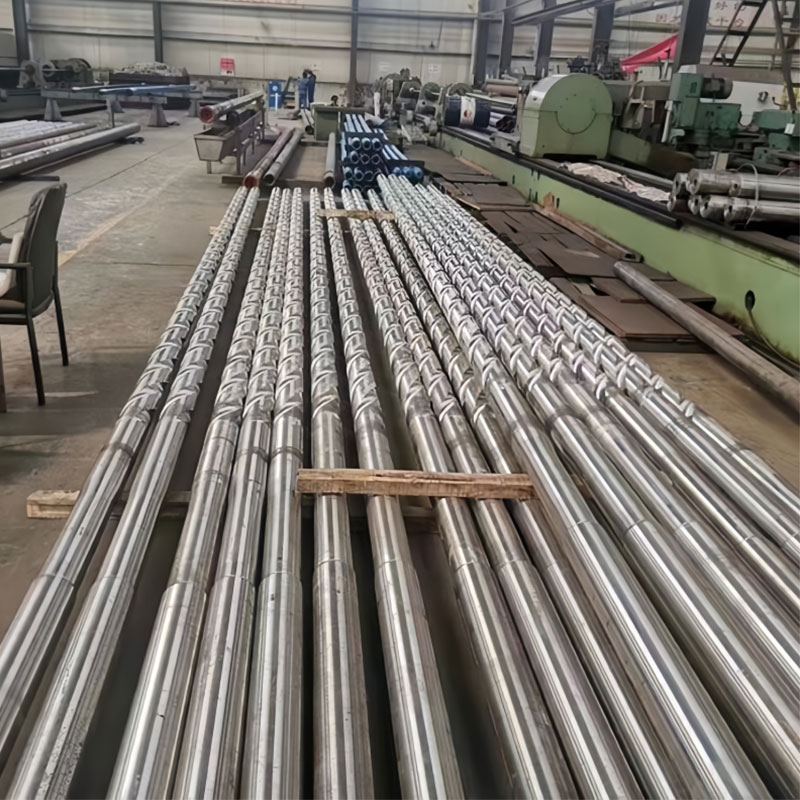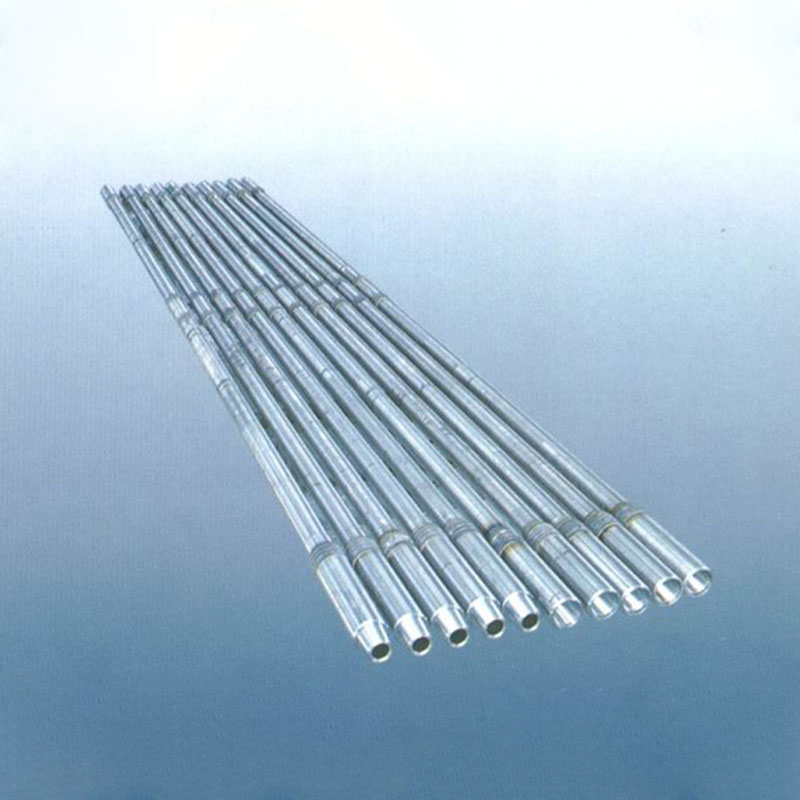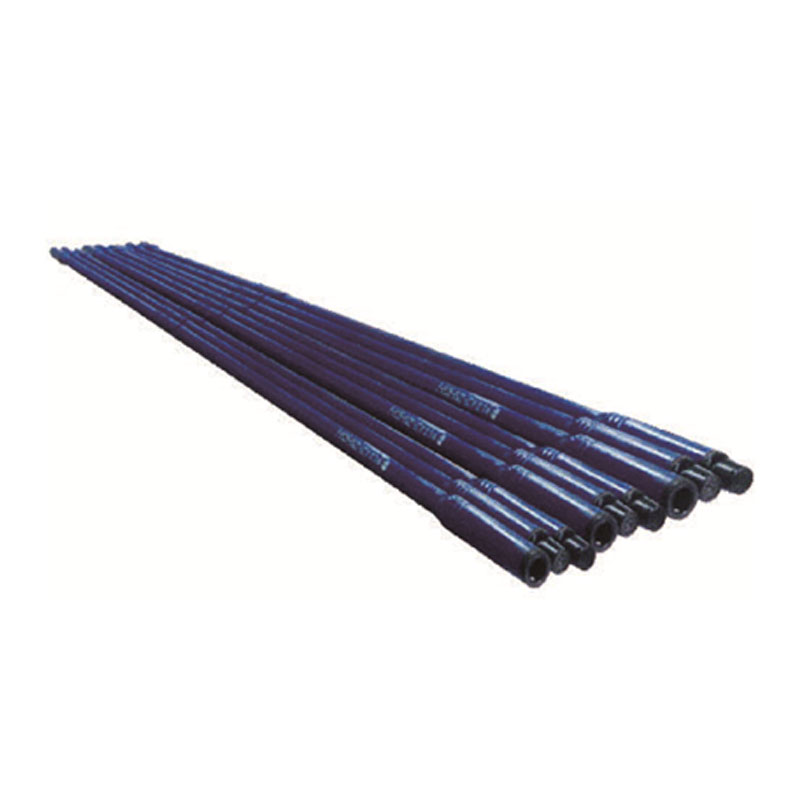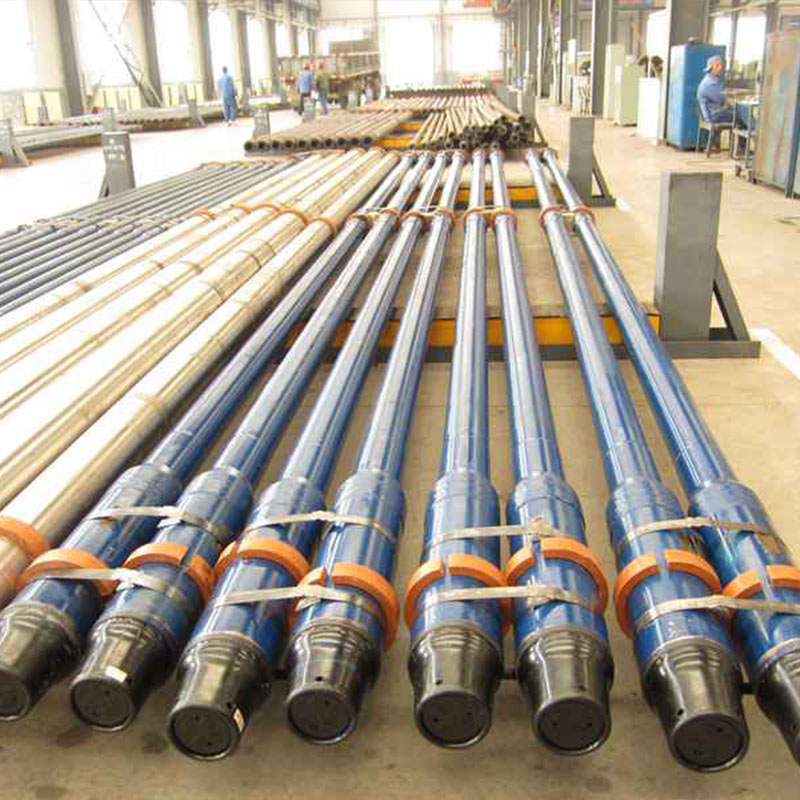
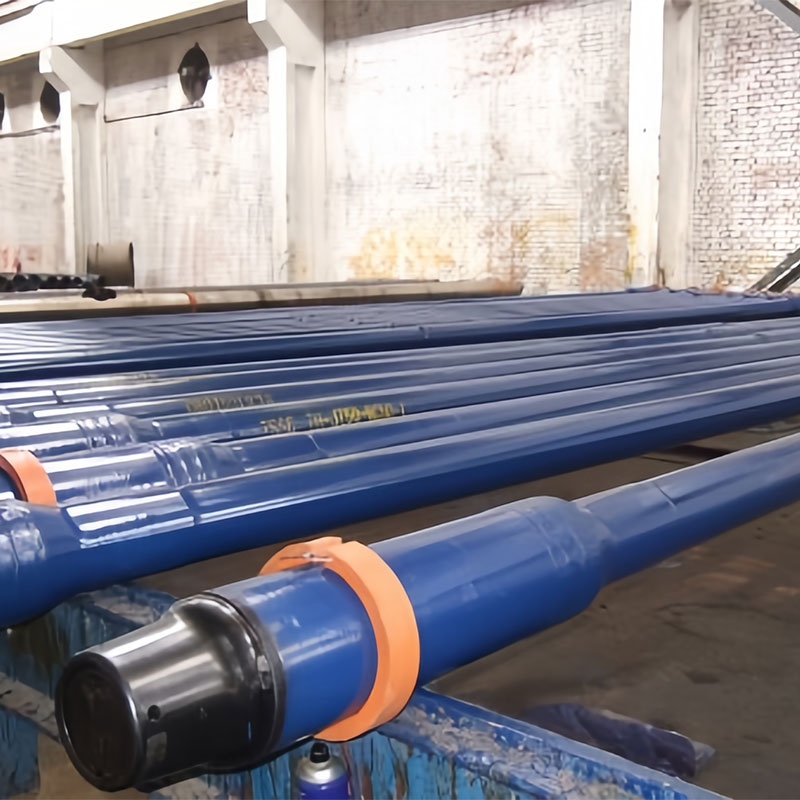
A drill rod is a special drill rod with a specific gravity between a conventional drill rod and a drill collar, usually with extended joints and wear-resistant belts. Its design is similar to that of a drill rod, but its wall thickness is between the drill rod and the drill collar.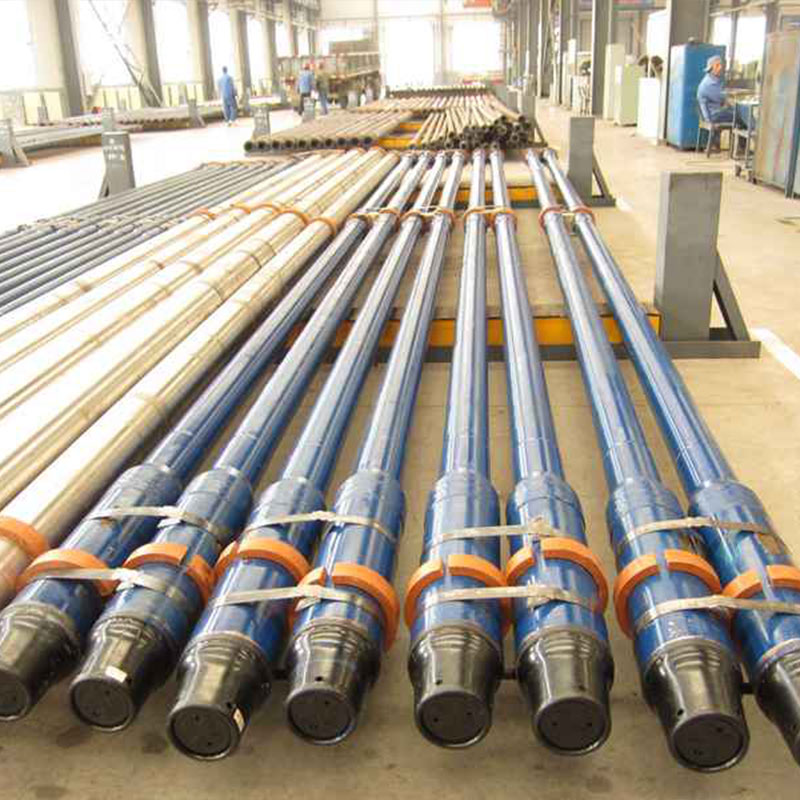
It is mainly used in the transition zone between the drill collar pipe and the drill rod, which can facilitate the change of bending stress between them and reduce the damage to the drill rod. The middle part is usually designed with a wear-resistant belt, which can act as a stabilizer, improve the rigidity of the drill rod weighted in the drill string, and help reduce well deflection.
The drill rod weighted can replace a part of the drill collar pipe, thereby reducing the lifting load and increasing the drilling depth of the drilling rig.
In directional wells, a drill collar can replace most drill collars, reduce torque and sticking, reduce costs, and help maintain the orientation of directional wells.
The drill rod is widely used in oil and gas drilling operations, especially in difficult drilling conditions such as horizontal wells, extended reach wells, and directional wells. Its benefits are more obvious, and it has many features and performance benefits.